What is acne?
Acne is one of the most common skin conditions that can affect both looks and confidence. It’s not merely an aesthetic issue, as studies have shown it directly correlates with one’s mental health in the long term.
According to the NHS, up to 95% of people aged 11 to 30 are affected by acne to some extent. While acne is often seen as something ‘you grow out of’, about 3% of adults have acne over the age of 35.
Acne, officially acne vulgaris, is caused by the P. acnes bacteria in the skin. It’s a chronic inflammatory condition characterised by blockages of the pores. Acne can occur on the face, chest or back. While not all acne is hormonal, hormones play a major role.
What is hormonal acne?
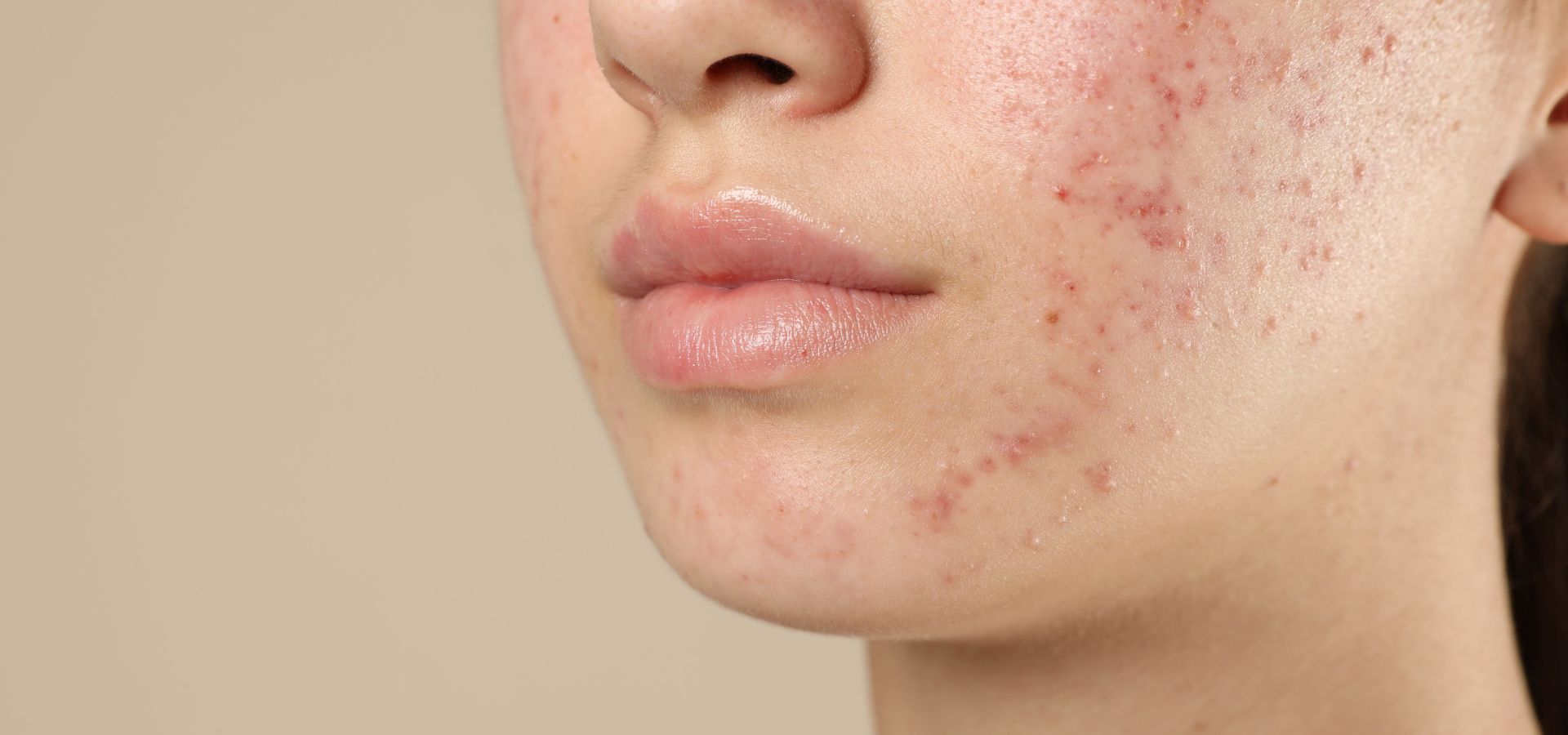
Hormonal acne is triggered by fluctuations in hormone levels, particularly androgens, which cause an overproduction of oil (sebum), resulting in pore blockages, inflammation and breakouts.
What does hormonal acne look like?
What causes hormonal acne?
Several hormones influence this:
- Testosterone and DHT (dihydrotestosterone)
- Estrogen fluctuations
- Progesterone changes
- Stress-related cortisol increases
Treatment for hormonal acne
Always consult a medical professional to reach the ideal treatment plan for you. Acne is a complicated condition, and a treatment is never a one-size-fits-all.
The medical treatments we use in our clinic include:
- Spironolactone: Spironolactone is a diuretic; however, it also blocks androgens. Women with acne usually have higher levels of androgens. While spironolactone is not licensed to treat acne, it’s been shown to be effective, and Dr Anastasia Therianou has been a principal investigator in the biggest national study, the SAFA study, which proved its efficacy. Doctors prescribe it for hormonal acne when suitable, in several countries.
- Oral contraceptives: Combined contraceptive pills that contain cyproterone acetate may be helpful for hormonal imbalances or conditions such as PMOS (formerly PCOS).
- Oral antibiotics: Usually erythromycin or a type of tetracycline such as lymecycline or doxycycline, it can be prescribed for about 12 weeks.
- Isotretinoin: The pure form of Vitamin A. Isotretinoin may only be taken under the direct supervision of a medical professional. The government’s medicine safety agency (MHRA), has strict rules for the prescription of this medicine. Isotretinoin can harm an unborn child and people who are able to get pregnant must enrol in a pregnancy prevention programme (PPP).
Topical
- Clascoterone: Sold as Winlevi. This FDA-approved, topical antiandrogen medication is one of the most important recent advances in the treatment of acne. Apart from blocking androgen hormones directly in the skin, it reduces oil production, inflammation and it can be combined with both retinoids and benzoyl peroxide. It can be used twice daily for hormonal acne in both women and men.
- Benzoyl peroxide: A topical antimicrobial that is mildly comedolytic, meaning it breaks down existing comedones (blackheads and whiteheads) and prevents the formation of new ones. This is typically the first recommendation in the treatment of mild to moderate acne.
- Retinoids: Such as tretinoin or adapalene. Vitamin A has been shown to target acne-causing bacteria. Retinoids are a safe and efficacious treatment of acne vulgaris.
-
- Trifarotene: Sold as Aklief. This newer, fourth-generation retinoid has been approved for face and body acne (back and chest). It helps to unclog pores and prevent new acne lesions, and it’s often less irritating than other retinoids for certain patients.
- Topical antibiotics: Such as erythromycin, tetracycline, clindamycin, minocycline and dapsone. These treat acne through antibacterial and anti-inflammatory effects.
- Salicylic acid: A betahydroxy acid (BHA) that targets the sebum in the pores. Chemical peels with salicylic acid can be performed in-clinic, depending on the severity of your acne.
|
TREATMENT |
TYPE |
BEST FOR |
RESULTS |
|
Spironolactone |
Oral |
Adult women with hormonal acne |
3–6 months |
|
Combined pill |
Oral |
PCOS, hormonal imbalance |
3-6 months |
|
Isotretinoin |
Oral |
Severe or resistant acne |
4-6 months |
|
Clascoterone |
Topical |
Mild to moderate acne |
12 weeks |
|
Benzoyl peroxide |
Topical |
Mild to moderate acne |
12 weeks |
|
Retinoids |
Topical |
Moderate acne, maintenance |
12 weeks |
|
Salicylic acid |
Topical |
Oily skin, blackheads |
4-8 weeks |
Frequently Asked Questions
How do I know if my acne is hormonal?
Can hormonal acne be linked to PMOS (formerly PCOS)?
How long until I see results from the treatment?
Depending on the severity of your acne and the treatment plan chosen by Dr. Therianou and her team, results can take a minimum of 12 weeks.
Can men get hormonal acne?
Does the pill help hormonal acne?
The combined pill can aid hormonal acne, especially for people with conditions such as PMOS, by balancing hormones. Stopping or switching hormonal contraceptives may trigger breakouts. Also, it is very important to know that some contraceptive pills can have bind to androgen receptors, causing side effects like acne.
Does hormonal acne go away with age?
About 50% of women in their 20s and 25% of women in their 40s experience hormonal acne. It doesn’t automatically go away with age.
Is fungal acne similar to hormonal acne?
These are often confused as they both start in the hair follicles, but have different causes. Fungal acne is due to excess yeast and can present itself as whiteheads, itchiness, redness and inflammation.
Can hormonal acne be cured naturally?
While lifestyle changes, like avoiding picking spots, stress reduction, changing bedsheets and pillowcases and a balanced diet can support the condition, they are rarely sufficient in the treatment of moderate to severe acne.
Further Information
Dr. Therianou and her team have treated hundreds of patients suffering from acne. Get in touch with us today to discuss the most suitable treatment for you.
134 Harley St, Marylebone, London, W1G 7JY
+44 (0) 2034684884
+44 (0) 2038695134